
What Are You Looking For?
In three-phase power systems, a single-phase ground fault often results in one high-voltage fuse blowing while the other two appear untouched. Field engineers frequently face a dilemma: is it necessary to replace the remaining two fuses, or is swapping the failed one sufficient?
While replacing only one phase is cost-effective in the short term, IEEE C37.48.1 and failure analyses strongly advocate for “group replacement” to prevent secondary incidents.
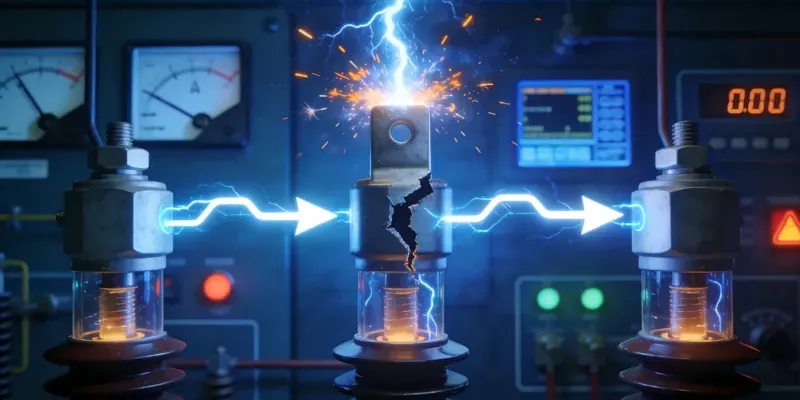
Current-limiting fuses are intricate precision devices. When one phase blows due to a severe fault, the other two, although intact, likely experience substantial transient current surges.
Thermal effects: The sudden spike in current elevates the temperature of unblown fuses, causing micro-scale thermal damage.
Mechanical stress: Strong electromagnetic forces can induce vibrations or slight deformations in the fuse wire.
Consequence: This “damaged but not melted” state shifts the TCC curve, meaning future normal operation could trigger unplanned tripping at currents well below rated values.
In three-phase transformer applications, fault dynamics become more complex.
Feedback currents: After one fuse blows, the remaining phases may continue carrying abnormal currents through magnetic coupling or load-side feedback.
Partial melting: Such currents might not fully clear the arc but can partially melt the fuse, which then resolidifies in a structurally weakened state, severely reducing its arc-quenching capability.
For certain three-phase loads, especially motors, leaving damaged fuses in service is risky.
If a weakened fuse trips unexpectedly, the system may enter single-phasing, creating neutral point shifts and voltage imbalance.
Motors running under this condition can overheat, potentially causing catastrophic damage. IEEE standards recommend resetting all protection elements to maintain system stability.
Current-limiting fuses are single-use precision protection devices. From a reliability engineering perspective:
A fuse subjected to an extreme fault enters a rapidly rising failure probability phase.
Replacing all three fuses resets the reliability clock, ensuring symmetrical and synchronized protection across all phases.
IEEE C37.48.1 specifies scenarios that require three-phase replacement:
Severe short-circuit events: Fault current approaches the fuse’s maximum interrupting rating.
Compromised sealing: Intense vibrations or environmental shifts occur during the fault.
DC resistance deviations: If the unblown fuses’ resistance diverges significantly from factory specifications.
Though group replacement increases initial maintenance costs, it is a cost-effective insurance policy compared to secondary outages or damage to downstream equipment.
Professional insight: In power protection, “looks fine” does not equal “is safe.” Following IEEE C37.48.1 guidance and replacing all three fuses after a fault eliminates hidden risks, ensuring long-term system reliability and stability.