
What Are You Looking For?
If you specify or purchase separable insulated connectors for medium-voltage distribution systems, you’ve likely seen the phrase “meets IEEE 386 standard” on product datasheets. But what does this actually mean for your project?
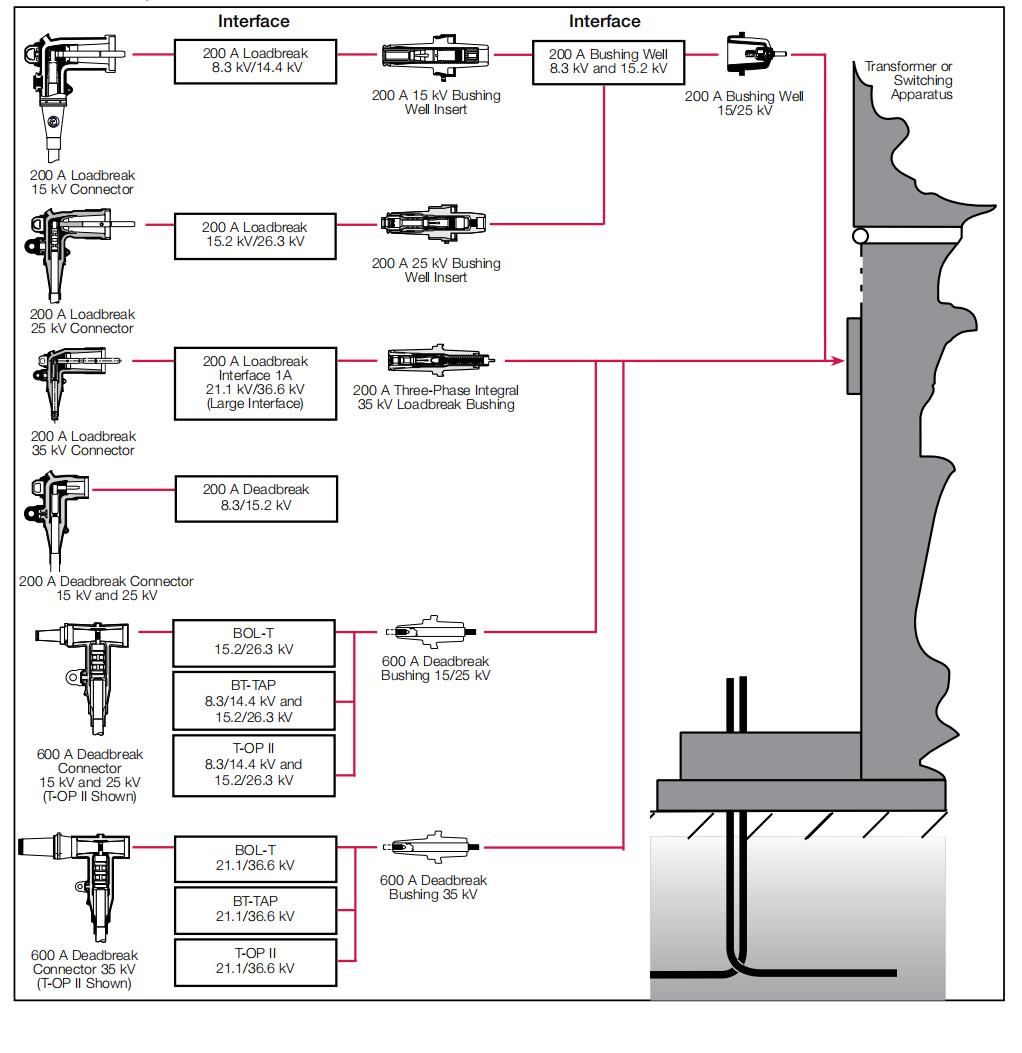
IEEE Std 386™-2006 defines the design, testing, and performance requirements for 15kV and 25kV class separable insulated connectors. It covers both Loadbreak and Deadbreak products and establishes the physical dimensions, electrical ratings, and test procedures that all compliant products must meet.
The most practical benefit of IEEE 386 compliance is interchangeability. Because the standard specifies exact interface dimensions — including the bushing well, the female elbow, and the male bushing probe — a compliant product from any manufacturer will mate with any other compliant product.
This means you can source your Eaton Cooper 600A deadbreak elbow from Jiuyingtech as a cost-effective alternative, knowing it will mate perfectly with an existing Cooper bushing or competitor product that also meets the standard.
Always verify that your separable connector supplier can provide IEEE 386 compliant products with documented test reports. Non-compliant products may appear identical but can fail prematurely in service, creating safety hazards and unplanned outages.