
What Are You Looking For?
Dry-type transformers are critical power equipment with unique characteristics that make them suitable for a variety of applications. However, like any equipment, they come with both advantages and limitations. Understanding these can guide in making informed choices for specific use cases.
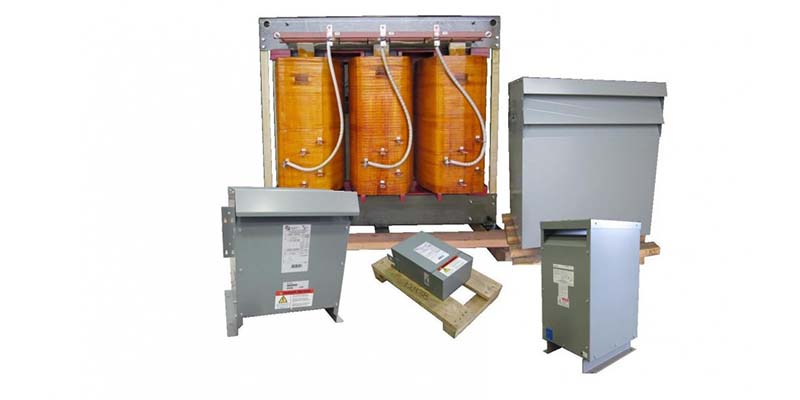
High Fire Resistance: Dry-type transformers do not use flammable resin or emit toxic gases, offering excellent fire-resistant properties. This enhances safety, especially in environments with strict fire prevention requirements.
Environmentally Friendly: Since no insulating oil is used, dry-type transformers are pollution-free. Their low-maintenance nature also minimizes environmental impact, making them a green choice for sustainable operations.
High Mechanical Strength: These transformers have good mechanical resilience, capable of withstanding temperature variations and short-circuit stresses, ensuring stable operation under demanding conditions.
Flexible Installation: Due to their compact size and light weight, dry-type transformers are economical to install, often without needing a specialized foundation. This flexibility allows installation close to load centers, enhancing efficiency and space utilization.
Temperature Monitoring and Protection: Equipped with automatic temperature monitoring and protection systems, dry-type transformers can continuously monitor operating temperatures, ensuring safe and stable operation.
Higher Cost: Compared to oil-immersed transformers, dry-type transformers have higher manufacturing costs, limiting their use in budget-sensitive projects.
Limited Resistance to Harsh Environments: Typically suitable for indoor use, dry-type transformers are less capable of withstanding harsh conditions like high humidity and extreme temperatures, limiting their applicability in severe outdoor settings.
Higher Leakage Reactance: Due to the silicon steel sheet construction of the core, dry-type transformers have lower magnetic permeability, resulting in higher no-load current and leakage reactance.
High Winding Temperature Rise: During operation, the core and windings generate heat, and inadequate cooling can lead to high winding temperatures, potentially impacting insulation and risking breakdown.
Maintenance Challenges: While dry-type transformers require little upkeep during normal operation, repairing faults, such as coil damage, can be challenging and costly due to their complex construction.
In summary, dry-type transformers offer excellent fire safety, environmental friendliness, mechanical strength, installation flexibility, and advanced temperature monitoring. However, the higher cost, limited resilience to harsh environments, greater leakage reactance, high winding temperature rise, and maintenance complexity are notable disadvantages. Choosing a dry-type transformer should involve a comprehensive assessment of specific operational needs and environmental conditions to maximize its benefits while mitigating its drawbacks.